
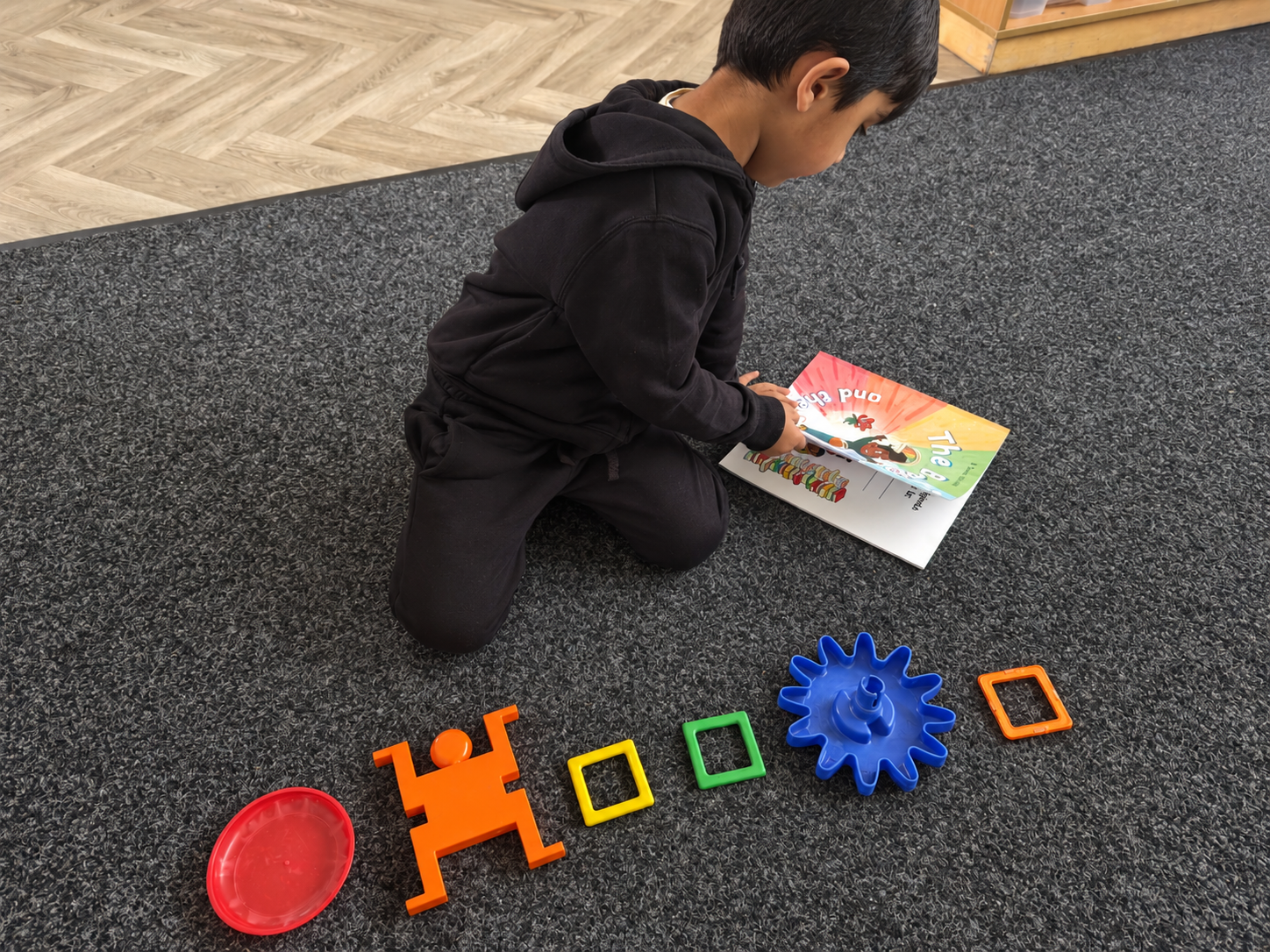
Our Pedagogy
How We Help Children Learn Through Play, Relationships and Discovery
Our pedagogy is how we help children learn.
It brings together the relationships, interactions, environments and teaching approaches our practitioners use to support every child’s learning and development.
Our curriculum is what we want them to learn.
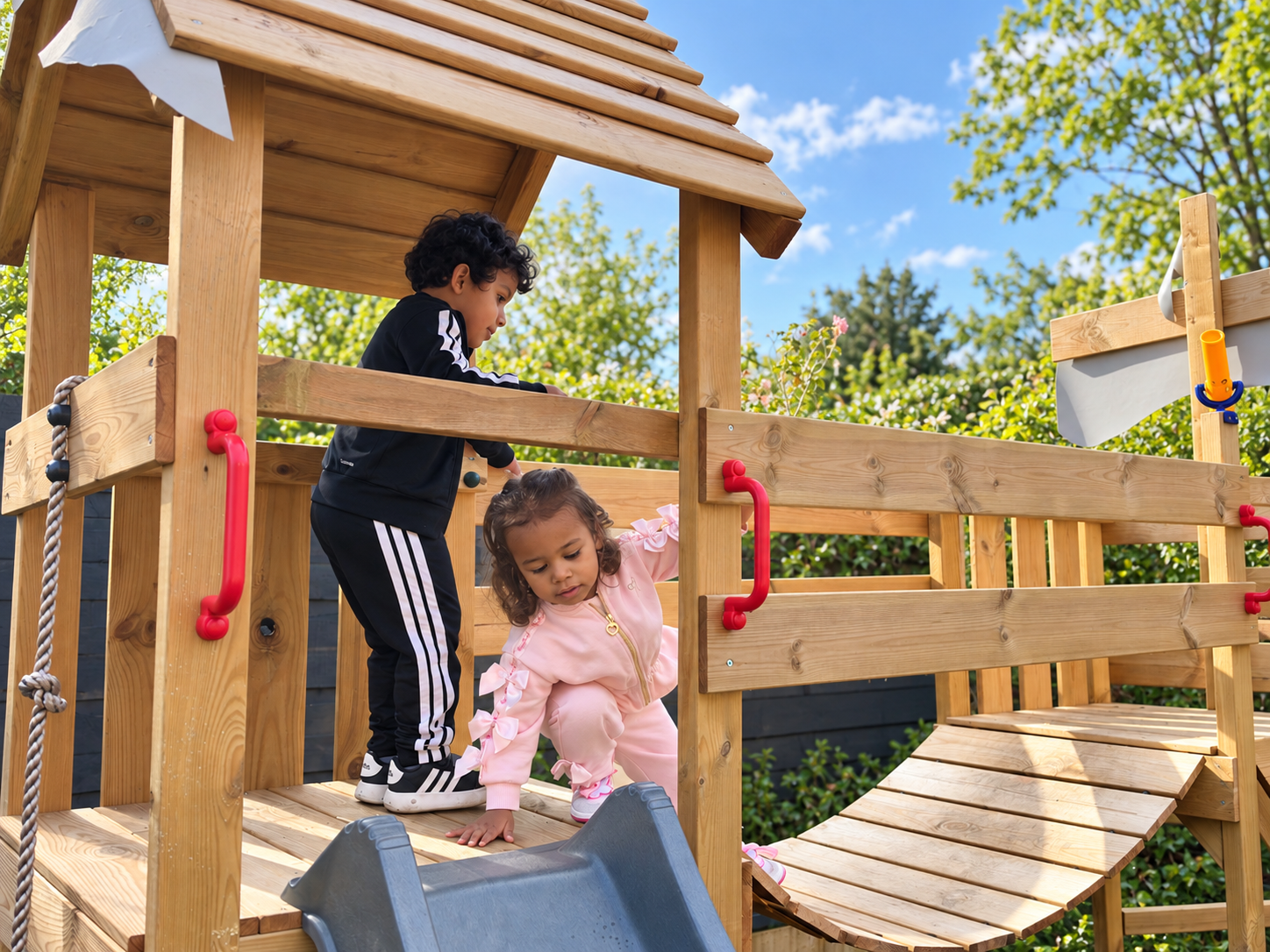
The environment is a teacher in its own right.
At Shooting Stars, our rooms and outdoor spaces are not simply places where learning happens. They are thoughtfully designed to take an active role in it.
The resources children can reach, the areas they can move between and the opportunities they have to investigate all shape how they play, communicate, solve problems and become more independent.
We create environments that invite children to make choices, test their ideas and follow their curiosity, while also providing calm and comfortable spaces where they can pause, concentrate and feel secure.
Our S.P.A.C.E. Model
Select each letter to discover how we create environments that inspire curiosity, independence and meaningful learning.
Stimulating
Every area is rich with opportunities to explore, question and discover. Our environments should make children want to touch, investigate and find out more from the moment they arrive.
What this looks like: sensory experiences, investigation trays, interesting textures, creative materials and resources that can be used in different ways.
Purposeful
Purposeful environments do not happen by accident. Every space and resource is selected with intent, based on what children are interested in, what they already know and what we want to help them discover next.
What this looks like: practitioners adapting areas around children’s interests, carefully introducing new resources and knowing why each experience has been offered.
Accessible
Children, including those with SEND, should be able to see, reach and choose resources for themselves. This gives children ownership of their play and the confidence to lead their own learning.
What this looks like: resources at child height, clear choices, adapted tools, visual support, Makaton and sensory-friendly spaces that help every child participate.
Calm
We balance adventure with serenity by providing calm, predictable spaces where children can pause, concentrate, regulate their emotions and feel secure.
What this looks like: cosy areas, quieter spaces, predictable room layouts and places where children can withdraw when overwhelmed and return when they feel ready.
Exploratory
Exploratory spaces give children the freedom to experiment, solve problems and test their own ideas instead of always being shown one correct way to do something.
What this looks like: open-ended play, loose parts, active outdoor experiences, manageable risks and practitioners who guide children without taking over.
S.P.A.C.E. makes our environment an active participant in every child’s learning and development.
Knowing when to join in and when to step back.
The resources around a child matter, but it is the relationships and interactions within that space that make learning meaningful.
Our practitioners observe carefully, listen to children’s ideas and respond to the interests unfolding in front of them. They may introduce new language, wonder aloud or ask a thoughtful question that encourages a child to look at something differently.
Sometimes the best support is knowing when not to intervene. By giving children time to investigate, make decisions and solve problems independently, practitioners protect their ownership of the learning.
Sustained shared thinking
Sustained shared thinking happens when a child and an adult work together to explore an idea, solve a problem or make sense of an experience. Both contribute to the conversation, with the practitioner helping the child develop their thinking without simply providing every answer.
S.P.A.C.E. changes with the child.
S.P.A.C.E. is not a fixed set of rules or a checklist every environment must follow in exactly the same way. It gives our practitioners a shared framework that can be adapted around each child’s strengths, interests, communication and individual needs.
This flexibility allows S.P.A.C.E. to support children with a wide range of special educational needs and disabilities, while recognising that no two children will need exactly the same support.
Practitioners work closely with families, the nursery SENDCo and involved professionals to understand what helps each child feel secure, communicate and participate.
Explore Our SEND SupportStimulating
The amount and type of stimulation is adapted so children remain interested without becoming overwhelmed.
In practice: Fewer resources, reduced noise, softer lighting or experiences based on a child’s interests.
Purposeful
Resources and interactions are selected around what will help the individual child participate and develop.
In practice: Supporting communication, turn taking, motor development, confidence or independence.
Accessible
The environment is arranged so children can understand, reach and use it as independently as possible.
In practice: Visual timetables, Makaton, communication systems, adapted tools and clearly organised resources.
Calm
Predictable environments support regulation, concentration and a child’s sense of security.
In practice: Quiet areas, transition warnings, sensory resources and consistent daily routines.
Exploratory
Children are given different ways to approach, repeat and take part in experiences without pressure.
In practice: Watching before joining, revisiting an activity or using an adapted resource.
